
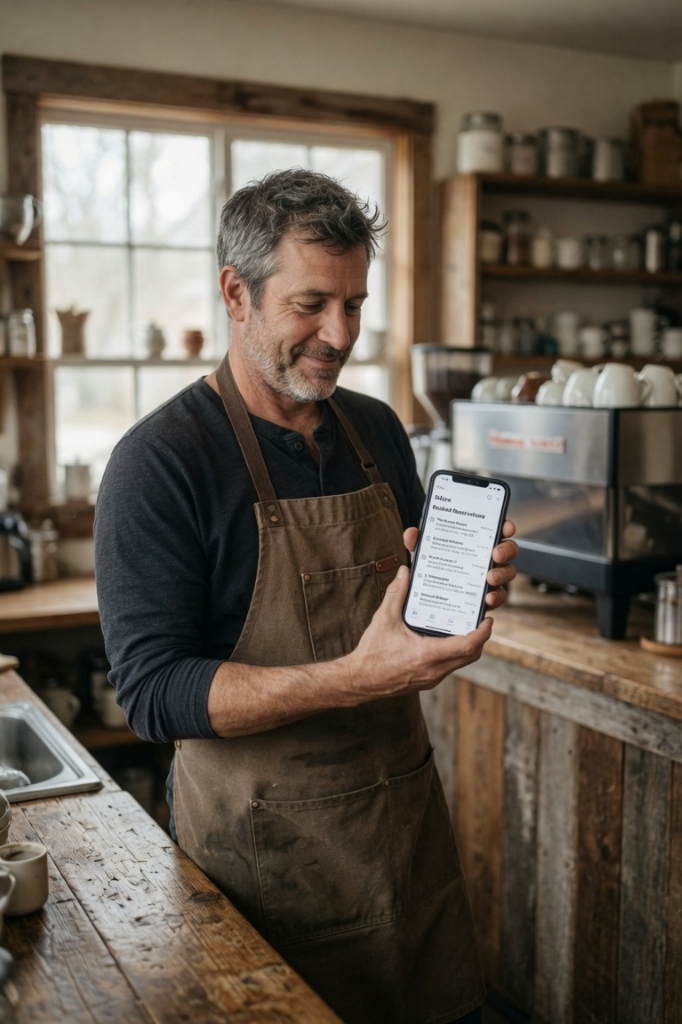
Mid-crawlspace in Solihull, mid-deposition in Guildford, mid-treatment in Cheltenham—picking up the phone is impossible when your hands are full. And every small business owner knows what happens when a call rings out: seventy-odd percent of first-time callers never leave a voicemail. They hang up and dial the next listing on Google Maps. If your average job clears £450 and you miss five viable enquiries a week, that is nine thousand pounds of work walking straight to the competitor down the road.
For thirty years, the default fix was simple: hire a human answering service. Moneypenny, Ruby, AnswerConnect, AllDayPA—companies with cheerful switchboard operators taking down names and passing messages along. Lovely people. But in 2026, the economics of call bureaus have run into two brutal realities: per-minute billing that spirals out of control, and a generation of buyers who refuse to wait two hours for a callback. Here is an unvarnished look at how answering services actually charge, four traps buried in their contracts, and five alternatives that convert leads into paying customers.
⚡ Key Takeaways
- Most human answering services charge £160 to £400 a month for entry-level bundles that cover barely 50 to 100 minutes of talk time. Once your allowance is gone, bureaus charge punitive overage fees of £1.50 to £3.50 a minute, with contracts routinely rounding up calls to thirty or sixty-second blocks. Robocalls, spam pitches, and wrong numbers burn your minutes just as fast as paying clients. Crucially, human switchboards do not book slots, check part availability, or take deposits; they simply email you message slips, leaving your evenings consumed by phone tag. Modern AI setups like Susan AI operate 24/7 across WhatsApp, SMS, and voice for a flat $50 a month after a 7-day free trial, qualifying jobs, checking diaries, and collecting Stripe card payments with zero minute caps.
How Answering Services Charge in 2026
Ask any telephone bureau for their rate card, and you will quickly notice how difficult it is to find a clear, predictable number. Providers deliberately split their fees across three moving targets.
The first is the pooled minute retainer. In the UK, entry plans sit around £180 to £320 a month (roughly $250 to $450 in the US). For that money, you get a bucket of 50 to 150 minutes. At three minutes per call, a hundred-minute bucket gives you about thirty conversations across the entire month. If you run a five-person clinic or a roofing firm getting eight calls a day, your allowance is completely burnt before the middle of the second week.
The second is per-call billing. Some agencies charge a smaller platform fee of £50 to £80 a month, then bill £1.75 to £2.60 every time an operator picks up the receiver. On paper, two quid to have a warm voice answer an enquiry seems cheap. The catch is that phone lines attract junk: marketing agencies selling web design, energy brokers, recruitment spammers, and misdials. Because an operator said your greeting and logged the call, you pay £2.50 to have someone write down the contact details of someone trying to sell you broadband.
The third is the overage rate, where growing firms take a real beating. Providers do not cut off your phone when your minutes run dry; they just start billing overages at £1.50 to £3.00 per minute in the UK and $1.80 to $3.50 in the States. An inquisitive prospect who stays on the line for six minutes to ask about prices can easily cost you eighteen quid before you have even seen a penny of revenue.
Four Traps Hidden in Traditional Call Center Contracts
Talk to business owners who left traditional answering services, and four complaints come up repeatedly.
The biggest headache is the message-slip bottleneck. Business owners picture a dedicated receptionist who knows their team, their diary, and their patch. In practice, operators sit in massive shared call centres fielding calls for a hundred different firms back-to-back. One second they answer for an emergency locksmith in Leeds; thirty seconds later they answer for a corporate tax accountant in Bristol. They cannot quote prices, do not know your travel radius, and cannot tell a customer when you can arrive. They just write down "John, boiler issue, please call back" and drop it in your inbox. You are still stuck doing two hours of phone tag every evening after work.
Then comes the problem of paying for robot diallers. Spam calls and automated sales pitches hit business numbers daily. Pick up your mobile yourself and you hang up after three seconds for free. Divert to an answering service, and their operator answers with your full company greeting, waits for the bot to hang up, and logs the call. That thirty-second dial gets billed against your minute allowance. Letting a bureau screen your spam can easily waste £50 to £90 of your retainer every month.
Billing rounding is another quiet margin killer. Most bureau agreements include clauses that round calls up to the nearest thirty-second or sixty-second increment. If a client calls to ask for your postcode and hangs up after twenty-four seconds, you are billed for a full minute. If the operator tries to patch the call through to your mobile, bureaus routinely bill for both the incoming call and the outbound leg simultaneously, doubling your per-minute burn on every transfer.
Finally, there is the shift to text messaging. Over seventy percent of consumers under fifty prefer texting or messaging over waiting on a phone line. If someone has a burst pipe, a broken tooth emergency, or needs a boiler serviced, they want an answer right now. Hearing an operator say "someone will call you back later" sends them straight to the next business on Google Maps who offers instant WhatsApp booking. Voice-only answering services leave your digital front door wide open.
The Real Monthly Numbers: Three Scenarios
Look at how the maths plays out in daily trade across three different businesses.
Take Dan, who runs an independent plumbing and heating outfit in Reading. Dan takes roughly eight calls a weekday while on site. On a 150-minute answering plan at £220 a month, his minutes evaporate by mid-month. Across 160 calls averaging 1.8 minutes, he uses 288 minutes—leaving 138 overage minutes billed at £1.75 each (£241.50). Add his base fee and VAT, and Dan spends over £550 a month just to collect email notes. Replacing that with an automated WhatsApp flow via Susan AI costs him a flat $50 a month after a 7-day free trial. The system replies in eight seconds, asks for boiler error codes and photos, checks his live Google Calendar, and books jobs directly. Dan pockets an extra £500 a month and picks up four extra jobs a week.
Or look at Clare's five-person aesthetics clinic in Harrogate. Clare's clinic handles eighty enquiries a week for botox, chemical peels, and consultations. Using Moneypenny, Clare was paying an £850 monthly retainer for 400 minutes. Because medical consultations take time, calls regularly averaged four minutes, generating hundreds of pounds in surprise overage charges that pushed her monthly bill to £1,200. Worse, the operators could not take deposits, leaving her clinic with an eight percent no-show rate. Moving her intake to Susan AI at $50 a month after a 7-day free trial, prospective patients get screened for contraindications on WhatsApp, view treatment prices, and pay £50 Stripe deposits upfront. Her no-show rate dropped to under two percent.
For a boutique law firm in Manchester handling family and commercial law, forty weekly calls to Smith.ai or a human bureau run £600 to £1,100 a month. While human operators are polite, partners still spend two hours every afternoon ringing callers back to run conflict checks and explain retainer costs. Deploying Susan AI alongside their office line, standard qualification questions and consultation deposits are handled on WhatsApp before a solicitor ever picks up the receiver, saving fee-earners ten non-billable hours every single week.
Intake in Action: Message Slips vs Instant WhatsApp Resolution
To see the real operational difference, compare how a typical customer enquiry plays out on a busy Tuesday afternoon.
At 2:15 PM, Mark discovers his office air conditioning unit in Birmingham is leaking water across the server room floor. He searches Google and rings a local commercial HVAC contractor. The call forwards to a remote call bureau in Swansea. The operator answers: "Good afternoon, Midland Climate Services, how may I help you?" Mark urgently explains: "Our server room unit is flooding the floor, we need an engineer immediately!" The operator replies: "I am sorry to hear that, sir. All of our technicians are out on site right now. May I take your name and contact number so an engineer can call you back?" Mark gives his details. At 2:17 PM, the call ends. The operator types a summary and emails it to the contractor's info@ inbox. The contractor is driving between jobs on the M6 and does not see the email notification. Meanwhile, Mark is not going to wait around while computer servers short out. He searches Google again, calls a second contractor, and books them on the spot. At 4:45 PM, the first contractor pulls over, reads the email message slip, and calls Mark back. Mark answers: "Sorry mate, you took too long. We already have someone here fixing it." The contractor lost an eight-hundred-pound emergency commercial repair, and his answering bureau still billed him £3.50 for taking down Mark's name.
Now look at that exact same emergency with Susan AI managing the contractor's communication line. At 2:15 PM, Mark calls the HVAC contractor's number. Because the team is on site, the call rings out. Within eight seconds, Susan AI automatically pings Mark's phone with a WhatsApp message: "Hi Mark, this is Susan from Midland Climate Services. We missed your call as our senior engineers are on site handling emergency cooling repairs right now. How can we help you this afternoon?" Mark replies instantly: "Our server room AC in Birmingham is pouring water over the servers! We need an emergency callout right now!" Susan AI recognizes the commercial urgency and checks the engineer's live schedule: "Understood, server room leaks are treated as priority emergencies. Our senior commercial technician Dave is finishing an inspection in Aston and can reach your Birmingham office by 3:15 PM today. Our emergency commercial diagnostic fee is £140 plus VAT. Would you like me to dispatch Dave to you now?" Mark texts back: "Yes, please send him immediately!" Susan AI: "Brilliant. Dave is booked and en route to you. To confirm your dispatch and issue the gate pass, please tap this link to secure the callout fee with corporate card or Apple Pay: [stripe.com/pay/midland-hvac-callout]. Once paid, Dave's live vehicle tracking link will appear on your screen." Mark approves the payment with Apple Pay in ten seconds. Susan pings Dave's phone with Mark's address, contact number, and fault description. Dave redirects his van toward the server room. Total time from missed call to paid booking and engineer dispatch: one minute and forty seconds. No phone tag, no lost revenue, and zero per-minute billing fees.
Five Better Alternatives to Legacy Answering Services in 2026
If you want reliable coverage for your business calls without getting trapped in per-minute overage bills, consider these five modern alternatives.
Susan AI Business Manager: For small businesses looking for 24/7 client communication across phone calls, text messages, and WhatsApp, Susan AI provides a complete autonomous front desk for a flat $50 a month after a 7-day free trial. Instead of just taking messages, Susan answers questions about pricing and services, qualifies job details, checks team calendars, and takes card deposits through Stripe. If you are on a ladder or in a consultation, our automated missed call text-back system sends an instant WhatsApp message to the caller within eight seconds, converting missed calls into booked clients before they can ring anyone else. If you currently pay high monthly bills to legacy call centers, read our comparison of Moneypenny alternatives and true costs and our guide to Ruby Receptionist alternatives to calculate your savings.
Smith.ai: Smith.ai combines human call agents with AI routing tools to handle incoming phone calls, web chats, and basic intake screening. Their operators can schedule appointments on calendars like Calendly and collect payments through major gateways. Unlike basic call bureaus, Smith.ai blocks spam and telemarketing calls for free without deducting from your plan. However, Smith.ai sits at a premium price point, starting at $290 to $600 a month for small call volumes. It is best suited for boutique law firms and corporate consultants where every call represents a high-ticket legal retainer.
Moneypenny: Moneypenny is the UK market leader in dedicated human receptionists. When you sign up, you are assigned a named receptionist who learns your company greeting and transfers VIP calls directly to your team. Their service is polished and reliable for traditional corporate offices, estate agents, and established professional practices. But premium human service comes with premium pricing: monthly retainers typically start around £195 to £350 for limited minutes, with overage fees quickly mounting if your call volume fluctuates. To see how Moneypenny compares directly against automated front desks, check our breakdown on Moneypenny vs Susan AI.
AnswerConnect: If you run an emergency lockout service or commercial refrigeration firm that gets calls in the middle of the night, AnswerConnect gives you round-the-clock human coverage. Their staff work across international time zones to pick up night calls. The service works reliably, but their pooled minute plans start at roughly $325 or £260 a month for limited talk time. If most of your 2:00 AM callers just want to know your callout rate or whether you cover their postcode, paying night-shift minute rates to take down a name can be hard to stomach.
VoIP Apps like Dialpad or OpenPhone: For owners who prefer picking up their own calls, running an app like Dialpad, RingCentral, or OpenPhone on your smartphone costs £15 to £25 a user each month. It gives you a clean business landline, custom voicemail greetings, and text transcripts of missed calls. It looks professional, but you still have to do all the heavy lifting yourself. If you are halfway up scaffolding or stuck in clinic, an app on your phone won't quote prices, book slots, or collect deposits.
Comparing Coverage Options for Small Business
Which setup makes sense depends entirely on what your callers need. A barrister's chambers, a family law practice, or a grief counsellor needs a discreet human operator who can listen patiently to someone in tears. In those settings, paying Moneypenny or Smith.ai £500 a month pays for itself if it lands one extra client.
But for most local businesses—from plumbers and electricians to physio clinics and car mechanics—paying a telephone bureau £400 a month just to email you message slips is throwing money away. Callers don't want a callback four hours later; they want to know if you can fix their boiler or relieve their back pain today. That is why combining a standard phone line with Susan AI works so well: callers get an instant WhatsApp response in eight seconds, get their questions answered, pick an open slot in your diary, and pay a Stripe deposit before they ever think about ringing a competitor. Take a look at our pricing page for the full $50/month plan details, or see how other booking systems stack up in our breakdown of Jobber pricing and alternatives.
Three Practical Safeguards Before Signing Any Phone Contract
Before locking your business into a contract with any phone bureau, watch out for three things in the fine print:
The first is the real cost of overage minutes once VAT is added. Sales reps love quoting a tidy monthly retainer of £180 or £200. Ask them to put in writing what happens when a burst pipe or cold snap doubles your calls. You want to see the exact penalty per minute, whether calls round up to the nearest sixty seconds, and whether patching a call through to your mobile bills you twice.
The second is paying for glorified message slips. An email saying someone rang does not move your business forward. If the bureau cannot check your diary, explain your callout fees, or take a card deposit, you are simply paying two pounds for an email notification that forces you to spend your evening on callback duty.
The third is mobile call handling. Most tradesmen, surveyors, and mobile practitioners carry a smartphone on site rather than sitting behind a landline desk. If an answering service only covers a landline number, it will not help you when someone rings your mobile from a van sign or Checkatrade profile. You need a system that pings an automated missed call text-back via WhatsApp within seconds of any missed call on your mobile, locking in the customer before they search for another firm.
Frequently Asked Questions About Answering Services
How much does an answering service for a small business cost in 2026?
Most UK call centres charge £150 to £450 a month for packages covering 50 to 150 minutes of talk time. In America, retainers start around $250 to $500. Once you run past that allowance, providers charge £1.40 to £3.50 for every extra minute. Automated tools like Susan AI cover your phone, text messages, and WhatsApp for a flat $50 a month after a 7-day free trial with no talk-time caps or penalty fees.
What is the real difference between an answering service and a virtual receptionist?
An answering service is basically a message desk. Operators pick up the phone, jot down the caller's name and query, and email you a note. A virtual receptionist or modern AI front desk actually completes the work. It checks your Google Calendar, quotes your prices, screens postcodes, and collects Stripe card deposits so jobs get confirmed on the spot.
Are answering services billed per minute or per call?
Most providers bill by the minute, rounding up each conversation to thirty or sixty-second blocks. A few agencies bill per call, typically £1.50 to £3.00 for every connection. The trouble with per-call billing is you pay the same rate when automated spam bots and energy salespeople dial your number.
What happens when an AI answering service handles a missed call?
When a call rings out on your mobile or office phone, the system springs into action within eight seconds. It sends an automated WhatsApp message introducing your firm and asking how to help. The AI answers rate questions, checks your diary, collects card deposits, and confirms the booking without you having to drop your tools or leave a client.