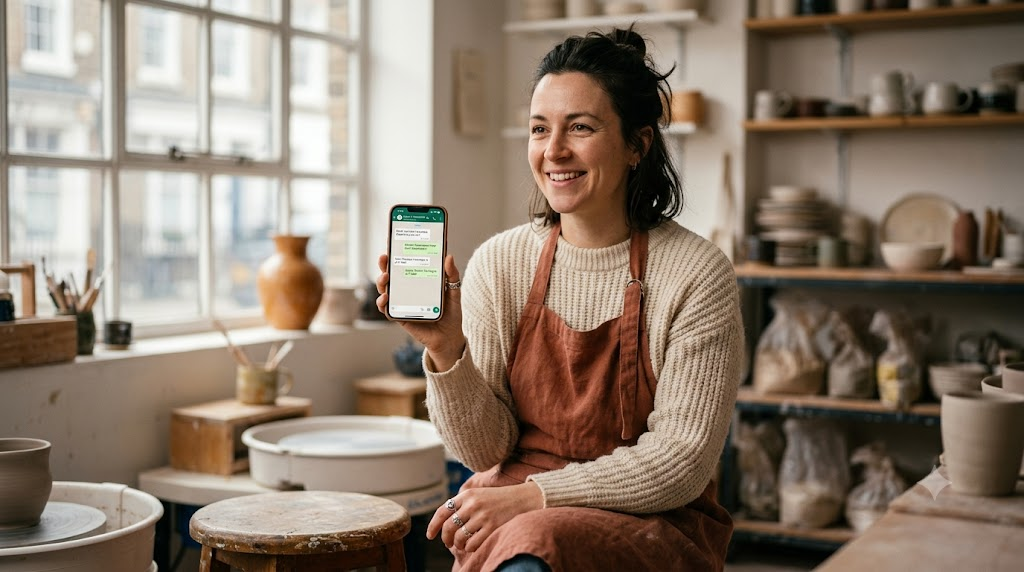
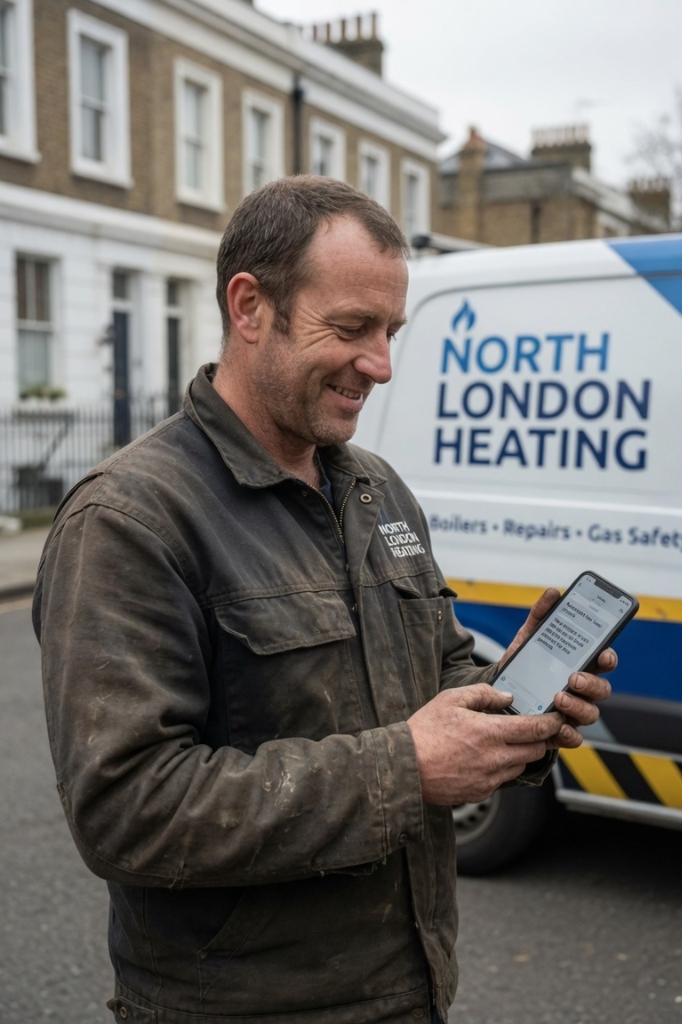
Ladder, vehicle hoist, treatment room — missed calls there aren't laziness, they're physics. Hands occupied, phone unreachable. But the damage was never the missed call; it's the silence after. 85%+ of voicemail recipients hang up without a word, and in mobile trades and clinics they ring the next Google listing within the minute. Flip it: a helpful text inside thirty seconds and the search stops. They wait. That's the entire discipline of missed call text-back — automated message the instant a call goes unanswered — plus seven templates to steal below.
⚡ Key Takeaways
- Voicemail loses ~85% without a message; a text inside a minute recaptures up to 70% of the loss. Speed beats polish — a quick helpful line now outperforms a perfect callback in two hours. Great texts ask for something actionable (postcode, photo, date), not just sorry. And WhatsApp beats SMS for the follow-up: photos, voice notes, video, instant triage, booking links — plus Susan automation behind it if you want the full desk.
Why thirty seconds works is pure context. They're holding the phone, problem fresh, intent peaked — burst pipe, dead boiler, overdue cut, seized back. Ring-out sends them to Google's back button by reflex. A buzz in the same minute breaks the reflex: need acknowledged, conversation open, competitor never entered. Even three honest sentences hold them.
What to Text Someone When You Missed Their Call (7 Copy-Paste Templates)
The seven templates below are grouped by trade and service sector. Steal them, adapt the bracketed details, and set them as quick snippets or automated replies:
1. General, fast acknowledgment
"Missed you — sorry! We're with a client right now. What's up? Reply here on WhatsApp and we'll answer within 15 minutes."
2. Trades on site (plumbers, sparkies, builders)
"Missed you — tools in hand here! Text the postcode plus a quick photo if it's visible and we'll price it the moment we're free."
3. Clinics and practices
"Thanks for calling [Clinic] — with a patient just now. Reply with your name and best day/time to book or move something, or book any hour here: [Link]."
4. Salons and aesthetics
"Sorry we missed you — mid-client! Tell us the treatment plus ideal dates and we'll confirm our next free slot the second this session ends."
5. Professional firms (accountants, solicitors)
"Thanks for calling [Company] — advisors are with clients. A line on what it's about plus your best email, and we'll come straight back."
6. Out of hours and weekends
"Thanks for messaging [Business] — shut right now (Mon–Fri 8–6). Urgent? Reply URGENT. Otherwise tell us what you need; first reply tomorrow morning."
7. Straight to the AI desk
"Missed you — on site, but Susan's on WhatsApp now for instant quotes, answers, and bookings: [WhatsApp link]"
Professional Text Message for Not Answering Call: Etiquette & Tone
When Mark or Dave thumbs out a message from the cab of the van, they stick to four simple rules. Say sorry once — "sorry we missed you" is plenty; grovelling makes your firm look chaotic. Tell them why you didn't answer — being up a ladder, with a patient, or driving on the motorway shows you are busy and in work. Ask for something useful right off the bat — a postcode, a picture of the leak, or an appointment date — so you start with facts. And give an honest time — twenty minutes or five o'clock — so the customer knows when you will pick the phone back up.
The texting objection dies on contact with customers: nine out of ten people prefer messaging to endless phone tag. Sounding professional over text is mostly structure. "Hey missed ur call who dis" versus "Hello — [Company] here, mid-job and can't pick up. How can I help? Details welcome." Same thumbs, totally different business. Keep it polite and prompt, and your customer stays warm without phoning the next local firm on Google.
How to Say "Sorry I Missed Your Call" Professionally via Text
Don't fob people off with a hollow line like "Sorry I missed your call, please ring me back later." If a landlord is standing ankle-deep in water from a split pipe or a homeowner has no heating in January, asking them to ring you back in two hours is an open invitation to dial the next firm on Google Maps.
Say where you are and ask for what you need: "Sorry I missed your call — tools in hand on site right now. Send over your postcode plus a quick sentence on what's happened, and I'll look at it the second I step out of the van." That acknowledges the enquiry, explains the delay, and captures the job details without playing phone tag.
For emergency trades and local businesses, pairing your phone line with WhatsApp photo triage turns lost calls into booked work. Check our guides on phone answering service for tradesmen, ServiceTitan pricing and alternatives, and Tradify pricing and reviews to see how call recovery works on site.
Three Ways to Run Missed Call Text-Back: Phone Shortcuts vs VoIP Auto-SMS vs AI WhatsApp Front Desk
Three ways to run it, honestly ranked.
Phone snippets, thumbed out manually per missed call: free, but you're checking the phone to send them — useless mid-drive or mid-job.
Carrier or VoIP auto-SMS on no-answer: automatic but dumb — static, one-way, no photos, no pricing, no booking.
WhatsApp AI desk (Susan): missed call becomes a WhatsApp invite, then sub-30-second engagement — photos collected, menu prices quoted, deposits banked, diary synced. Gold standard costs gold-standard money, but Susan gives you the full desk for $50 a month after a 7-day free trial. Check our guide on how to handle missed calls on the job site to see how independent contractors automate their intake.
Frequently Asked Questions (FAQ)
So what IS a missed call text-back, precisely?
Automated text or WhatsApp fired the moment a call goes unanswered: acknowledges, explains briefly, opens a text channel — capturing the lead before competitors enter the frame.
What should the text actually say?
Where you are (client, job, closed), how to help (details that let you start), when you'll answer. Three facts, two sentences.
How fast, exactly?
Fifteen to sixty seconds. Phone still in hand, competitor not yet dialled. Past a few minutes the magic fades.
WhatsApp or SMS for the recovery?
WhatsApp: ~98% opened, photos and video for triage, one-tap booking, actual conversation — against 160 plain characters. No contest where both reach the customer.